Why does condensation always appear in the same corner of a Dubai home?
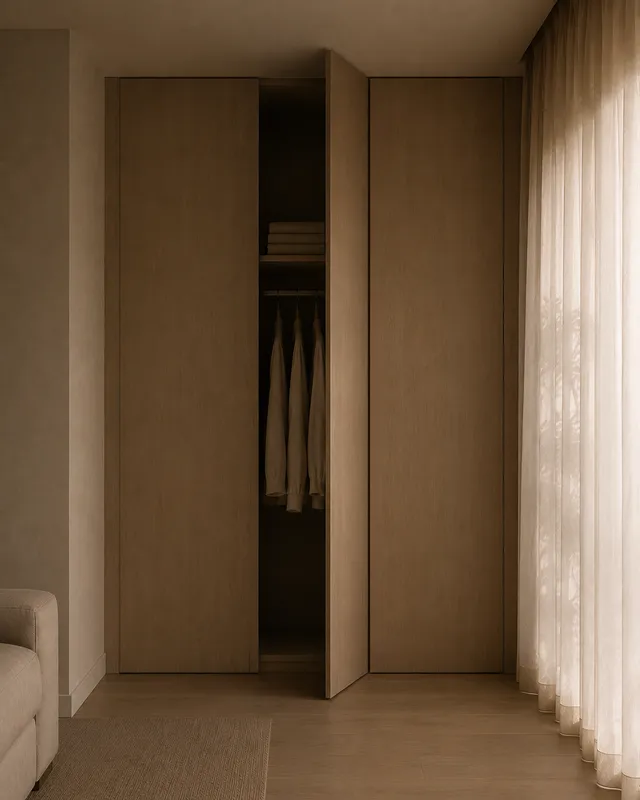
Because it is a question about surface temperature, not room humidity. Water appears wherever a surface is colder than the air touching it, and in an uncooled Dubai home the coldest surfaces are the ones nobody sees: the back of a wardrobe on an external wall, the corner behind a sofa, a bathroom nobody is using.
Key facts
-
Condensation is determined by surface temperature relative to the dew point, not by room humidity alone.
Water condenses wherever a surface sits below the dew point of the air in contact with it.
-
In one monitored Dubai villa, the odour index reached its full elevated level about five hours after the occupants left.
Hourly readings from a trained odour sensor, July 2024, one property. The level then held for eleven days.
-
Absence duration is a weaker predictor of the outcome than air movement.
Observed in a single property across four absences; the plateau was reached within hours in each.
What actually decides where condensation forms?
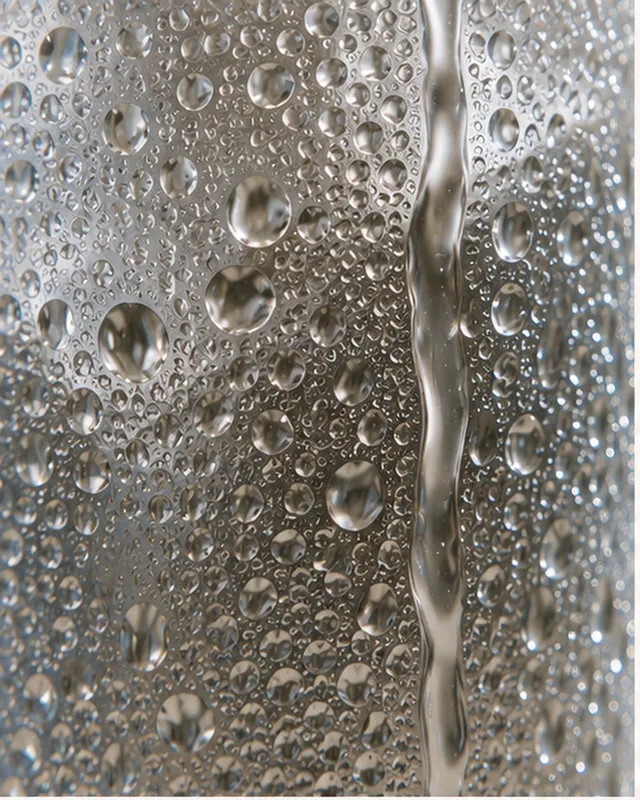
Surface temperature decides it. Water appears wherever something is colder than the air touching it, which is why the same mechanism produces beads on a cold glass, water on an air conditioning coil, and damp on the back panel of a wardrobe.
Once cooling stops in a Dubai home, external wall surfaces run cooler than the air around them, and enclosed volumes against those walls see no air movement at all. That combination — a cold surface and still air — is the condition, and it recurs in the same handful of places in almost every home.
How quickly does an empty Dubai home change?
Faster than the length of a trip would suggest. In one villa we monitor, the odour index reached its full elevated level roughly five hours after the family left, and then simply held there for the remaining eleven days.
A fortnight therefore loads a room about as fully as a summer does. The practical implication is that the preparation checklist is worth five minutes before any trip, not only before a long one.
Definitions
- Thermal bridge
- A part of a building envelope that conducts heat more readily than its surroundings, producing a locally colder internal surface where condensation forms first.
What we are sure of, and what we are not
Established
- Condensation forms where a surface is below the dew point of adjacent air.
- Enclosed volumes against external walls combine cold surfaces with still air.
Estimated by us
- That the five-hour saturation observed in one villa is typical. We have four absences in one property, not a sample.
Not known
- Whether saturation time varies meaningfully with building type, season or system state.
How the figures on this page were produced
Odour figures come from a trained relative index on a sensor installed in one Dubai villa. They are ratios against that same room's own lived-in baseline, never concentrations, and the sensor holds no individual calibration certificate.
About Gaia Solutions
We measure indoor air in Dubai homes and buildings, treat it with plant-based products, and tend it four times a year. Where we show our own data we state how many rooms, over what period, and with what coverage; our devices are factory-calibrated and we hold no individual calibration certificates, so we publish the shape of a change rather than an absolute concentration judged against a limit.
support@gaia-solutions.earth · +971 56 374 2421 · References & limits →